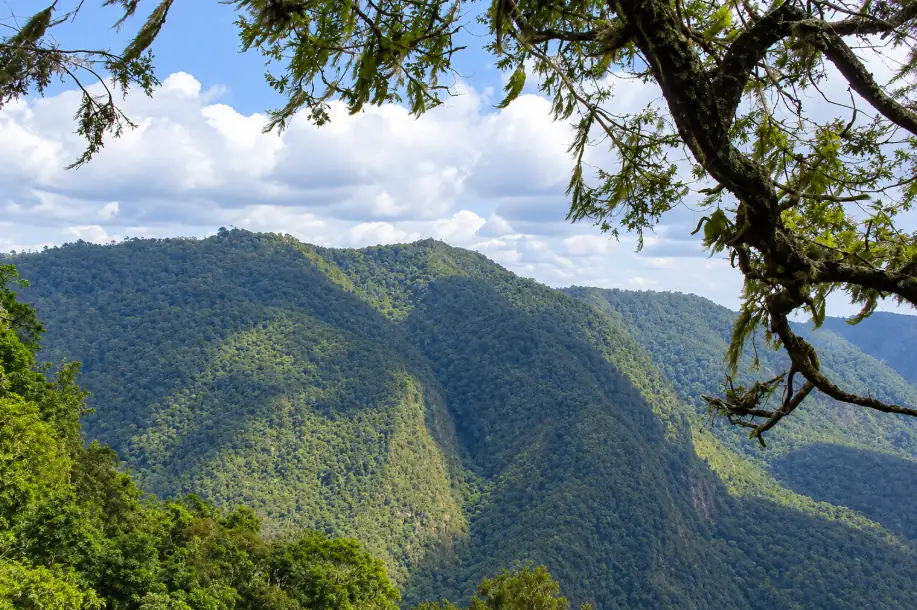
The Loita Maasai call it Entim e Naimina Enkiyio, the forest of the lost child. Covering roughly 33,000 hectares of the Loita Hills in Narok County, it has never been a national park or a gazetted reserve. It has survived because a community chose to care for it.
A forest governed by custom
For generations, the forest has been managed under customary law, with the traditional Oloibon institution at its centre. Unwritten rules govern who may graze, cut or collect, and when. Research on the forest describes it as sacred, woven into ceremony and healing, and shows the community drawing on those sacred practices to negotiate how the forest is used.
A refuge for elephants
For elephants, the forest offers food and water when the surrounding plains dry out, cover from disturbance, and a link between ecosystems across the region. About 440 elephants are estimated to live in the forest, and survey work has found that they keep away from its most disturbed parts.
Pressures that start outside the forest
Researchers date noticeable degradation to around 1999. Farms and settlement have spread into the forest, large tracts have been fenced by individuals, timber has been cut commercially and charcoal production is emerging. Climate change is drying rivers, which makes the forest's water more precious and competition for it sharper.
A shared future
None of these pressures can be solved by protecting elephants alone, or by putting a fence around the forest. They depend on decisions about land, livelihoods and governance, made by the people who live here. That is why we believe the most important conservation work in Loita is strengthening the community's own ability to care for its forest.