
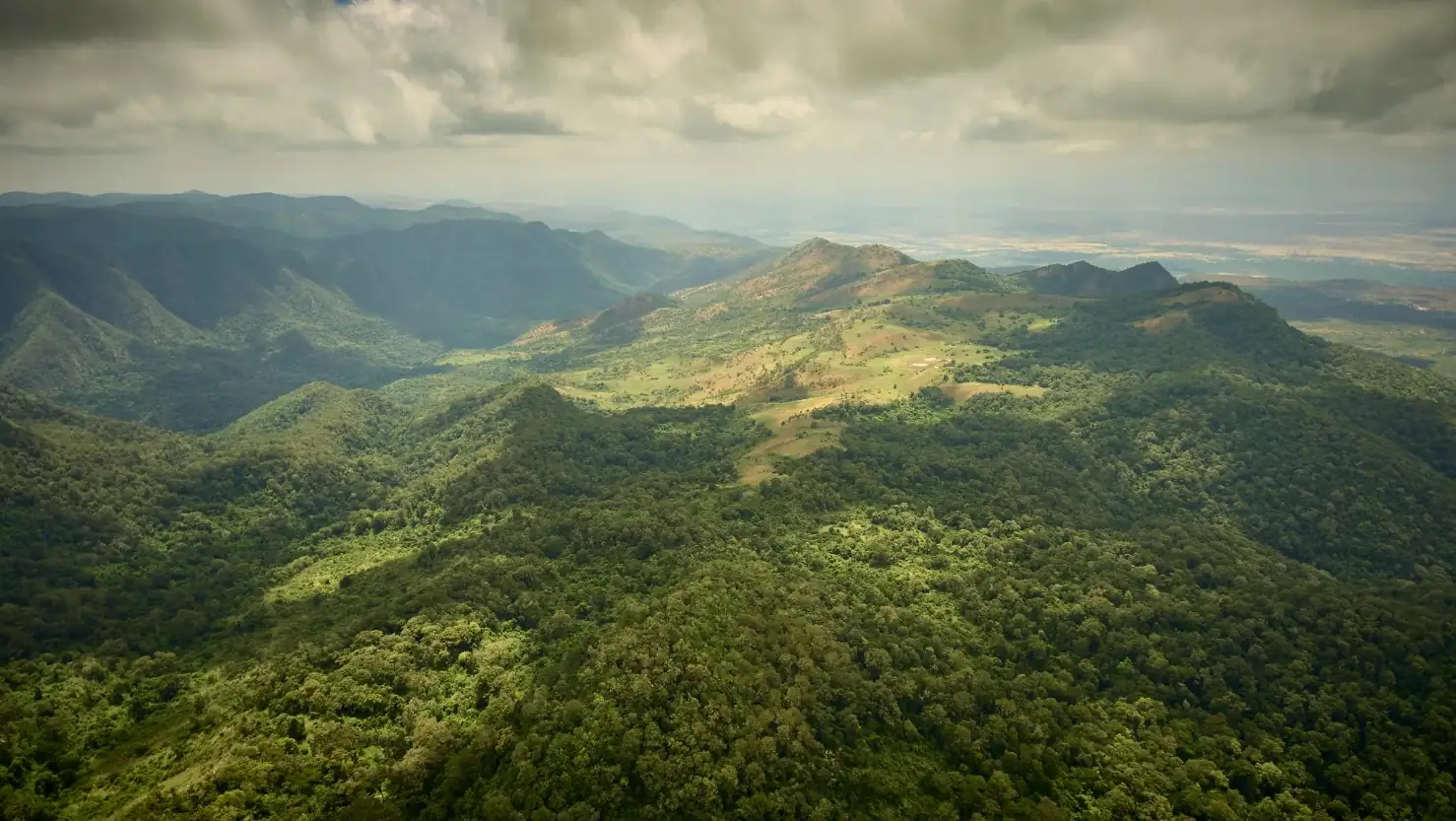
Forest-covered hills and ridges stretch to the horizon under heavy cloud

Our conservation work

Six focus areas, each set out the same way: the challenge, what we are aiming for and how we work towards it.

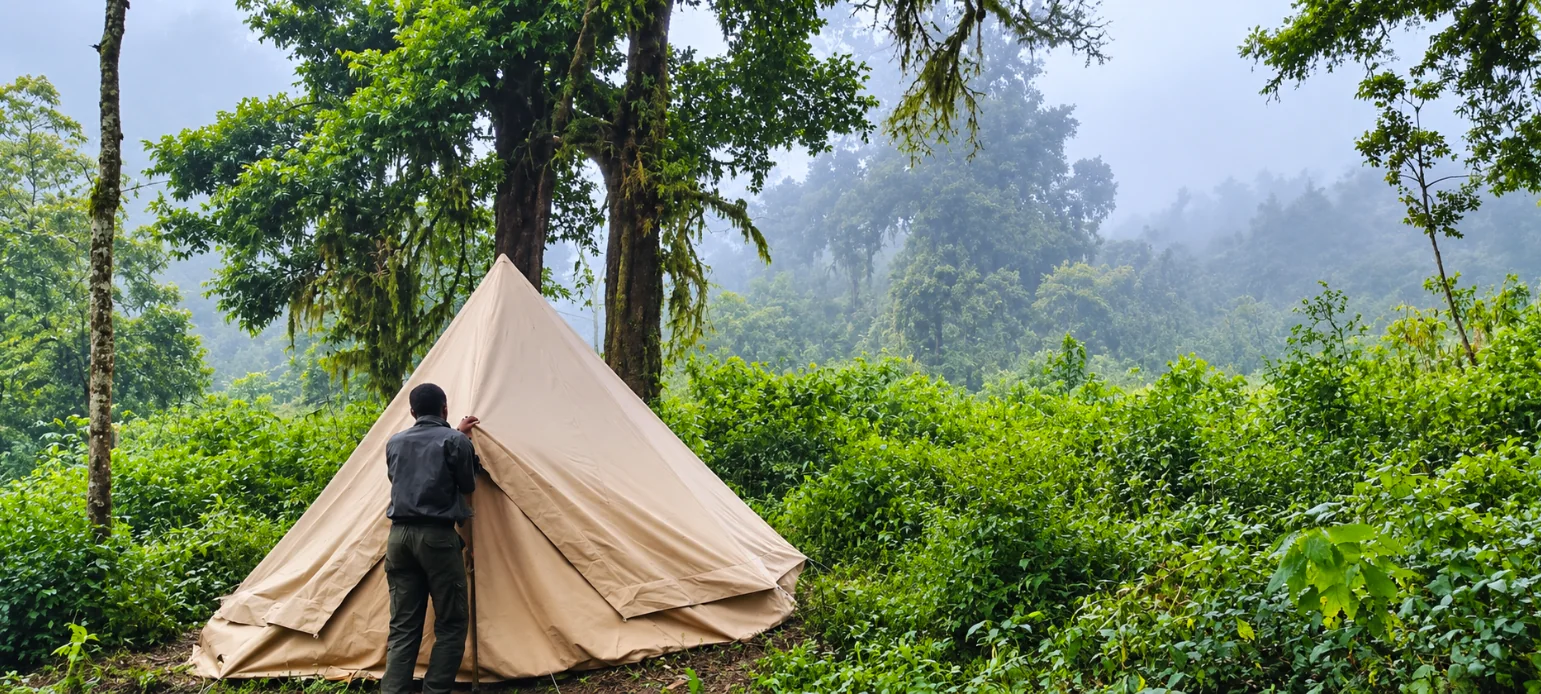
A man in field clothes pitches a canvas tent among tall, moss-draped trees and dense green undergrowth in misty Loita Forest
Making camp beneath the canopy, where our conservation work begins.
How we report progress

Work you can see, results you can trust

Conservation in Loita happens on foot: making camp under the canopy, walking the forest's paths at first light and recording what we find.

Every result we share comes from that ground-level work. It is dated, backed by evidence and published with the method behind it and its limits, so you know exactly what your support is achieving.

Some things we keep private. To keep elephants and the people protecting them safe, we never publish ranger numbers, patrol routes or the locations of wildlife.

Wildlife Protection and Monitoring

Loita Forest’s dense vegetation makes direct sightings of elephants difficult. Monitoring therefore relies on signs such as feeding activity, wallows, dung, footprints, and vocalisations. Loita Elephant Project aims to strengthen monitoring through drones, camera traps, and GPS collaring of selected elephants or herds, in collaboration with relevant wildlife authorities. Trained rangers and community volunteers will monitor elephant movements and provide early warnings to help prevent elephants from entering settlements, reduce human–elephant conflict, and minimise retaliatory killings.
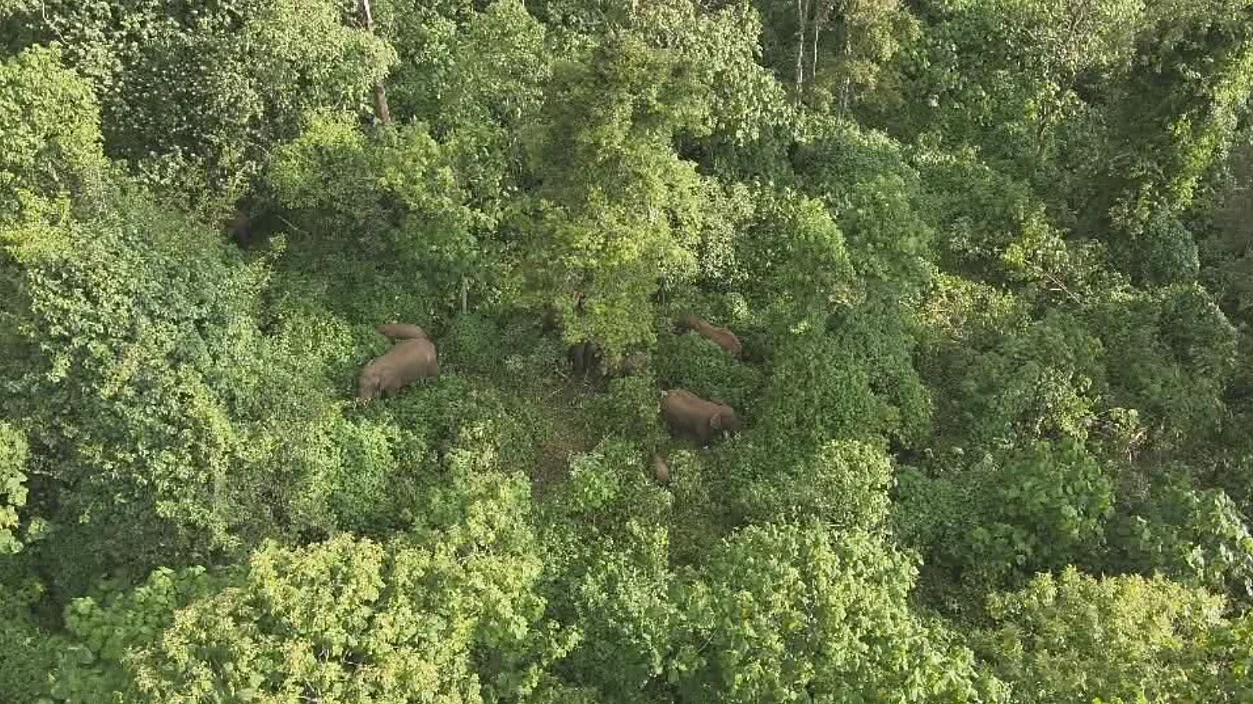
Seen from above, a small herd of elephants feeds in a clearing surrounded by thick green forest canopy
Eyes above the canopy. From the ground, a herd like this can be only metres away and still unseen. From the air, a drone can find elephants in thick forest within minutes, without disturbing them, so rangers and communities can be warned early and conflict can be prevented before it starts.
  1. The challengeLoita Forest lies outside Kenya’s national parks and reserves, so it has no permanent ranger force. That leaves elephants exposed to poaching for ivory and bushmeat snares. Where elephants damage crops or water points, frustration can turn into retaliation. Fences and new settlements are also closing the traditional routes elephants use to move between the forest and surrounding rangelands, pushing them into closer contact with people.
  2. Our objectiveTo protect elephants and their habitat in Loita Forest through anti-poaching patrols, wildlife monitoring, and prevention of human-elephant conflict. We aim to safeguard traditional elephant corridors, restore degraded forest areas, protect water catchments, and engage local communities in sustainable conservation to ensure peaceful coexistence between people and wildlife.
  3. How we workWe work alongside the Kenya Wildlife Service and the community to support patrols and the swift reporting of snares, carcasses, injured elephants and suspicious activity. We map and record the corridors elephants use, and bring their protection into community land-use discussions. Families are encouraged to report conflict early so it can be resolved before it turns into retaliation. To keep elephants safe, we never publish their locations or the details of protection work.
Forest Conservation and Restoration

Loita Forest is an important indigenous forest and water catchment that sustains biodiversity and supports communities beyond its immediate surroundings. We promote the protection of indigenous trees, prevention of illegal logging, responsible use of forest resources, and restoration of degraded areas where appropriate.

Protecting the forest means safeguarding its biodiversity, water sources, and ecological functions for generations to come.

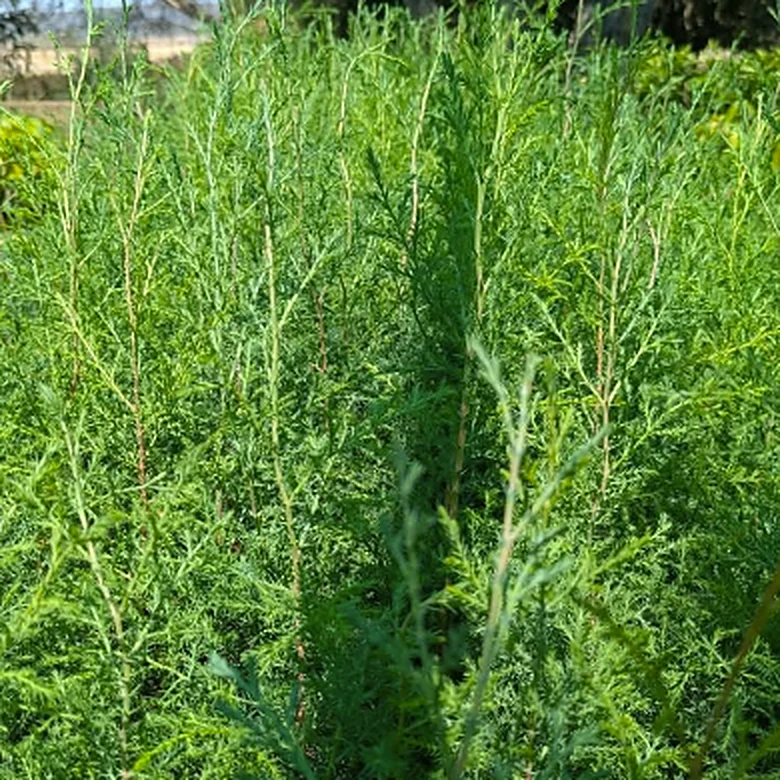
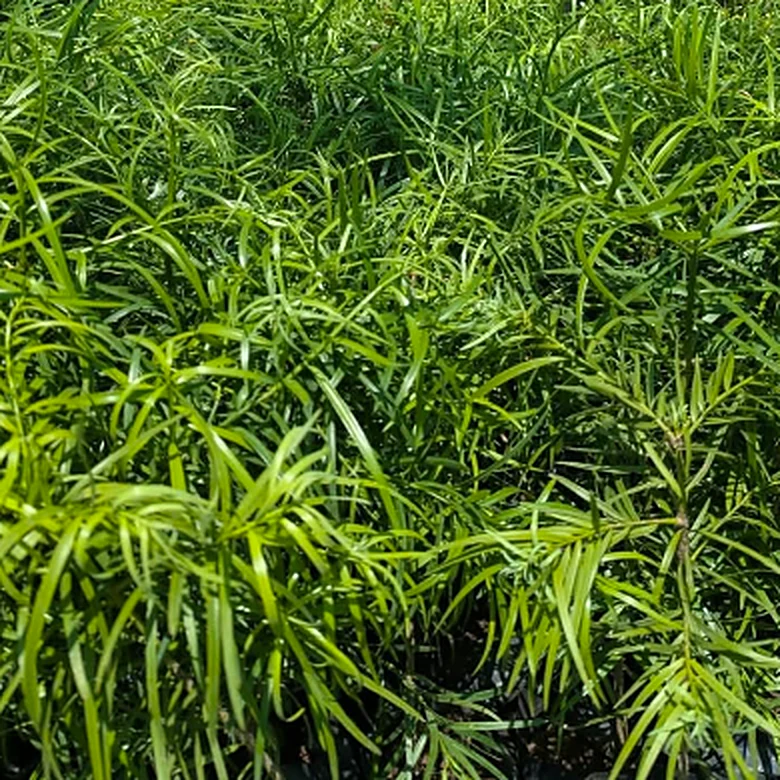
Dense, feathery young conifer seedlings growing close together in a tree nursery Young Podocarpus seedlings with long, narrow bright-green leaves packed together in a tree nursery
Indigenous seedlings growing under shade netting in a tree nursery: African pencil cedar (left) and East African yellowwood (right), ready to be planted in degraded parts of the forest.

Two trees the forest is losing

African pencil cedar Juniperus procera

Cedar is the tree loggers want most. Its red, fragrant heartwood resists rot and termites, so it is cut for fence posts, poles, roofing timber and planks. The largest, oldest trees are felled with chainsaws and axes, then sawn into posts and boards on the spot and carried out of the forest, leaving only a stump, bark and sawdust.

A felled cedar does not grow back from its stump, and a seedling needs many decades to become a mature tree. Each one cut is a loss that lasts generations.

East African yellowwood Podocarpus latifolius

Yellowwood grows tall and straight, giving pale, fine-grained timber that is valued for furniture, floors and building. Whole trees are cut down and sawn into planks inside the forest, and the tallest are often taken first, opening gaps in the canopy.

It grows slowly and its young trees need the shade of the forest to establish, so once the big trees are gone, natural regrowth is slow. Raising seedlings in a nursery and planting them back helps the forest recover.

  1. The challengeLoita Forest is a vast indigenous forest, but it is under growing pressure. Illegal logging takes valuable trees such as cedar, and charcoal burning thins the forest from its edges. Clearing for farms and settlement, and heavy grazing in drought years, leave gaps in the canopy. Old trees that took generations to grow are lost in a day, and seedlings struggle to return.
  2. Our objectiveTo keep the forest’s cover stable and, over time, growing again. We want to protect the springs and water catchments that depend on it, and to restore degraded areas with indigenous trees. Throughout, the community’s own forest rules and sacred sites must be respected and strengthened.
  3. How we workWe document illegal logging and forest damage and report it to the relevant authorities. We support community forest rules and the traditional institutions that enforce them. Where the community chooses, we back restoration: raising indigenous seedlings, planting them in degraded sites and caring for them until they establish. Over time, we compare forest cover against earlier records to see whether it is recovering.

Human–Elephant Coexistence

Living alongside elephants can bring serious challenges, including crop damage, damaged fences, threats to human safety, and the risk of retaliatory harm to wildlife. We promote community awareness, early reporting of elephant movements, and locally informed approaches to reducing conflict.

We believe that protecting elephants must go hand in hand with protecting people's lives, livelihoods, and dignity.

  1. The challengeAs forest shrinks and routes are blocked, elephants spend more time near farms and homes. A single night of crop raiding can destroy a family’s harvest. Damaged water points and fences cost money to repair, and encounters on paths can put lives at risk. When these costs go unanswered, tolerance for elephants falls and retaliation becomes more likely.
  2. Our objectiveFewer conflict incidents, faster and fairer responses when they do happen, and communities who see elephants as part of a shared landscape rather than a threat to their livelihoods.
  3. How we workWe share practical, locally suited ways to keep elephants away from crops and homes. These include early-warning systems, guarding during the harvest season, thoughtful farm layout and deterrents that do not harm elephants. We help families record and report incidents, so that the true scale of conflict is known and support can follow. We also work with community leaders to plan land use that leaves elephants room to move.

Habitat and Wildlife Corridor Protection

Elephants and other wildlife need connected habitats to move between feeding areas, water sources, and important parts of their range. We promote the protection of forest habitats and wildlife corridors, particularly where land subdivision, fencing, and habitat loss may restrict wildlife movement.

Our goal is to support a landscape where wildlife can move safely while communities make informed decisions about land use.

  1. The challengeElephants do not live in one place. They move between the forest, open rangelands, water sources and salt licks with the seasons, along routes that families have followed for generations. As land around Loita is subdivided, fenced and cleared for farms and settlement, those routes are being narrowed and cut. Elephants that lose their way through are pushed onto farms and into conflict with people, and pockets of forest become isolated from one another.
  2. Our objectiveTo keep forest habitats and the corridors that link them open and connected, so that elephants and other wildlife can move safely between feeding areas, water and the wider landscape. At the same time, we want families to have the information they need to make their own decisions about land use, with wildlife movement taken into account.
  3. How we workWe work with the community, elders and the Kenya Wildlife Service to identify and record the routes wildlife use, drawing on local knowledge and on signs such as tracks, dung and feeding. We share this information in community forums and land-use discussions, so that fencing, subdivision and settlement plans can leave key passages open. We support the protection and restoration of forest habitat along these routes, and encourage solutions that work for both people and wildlife. To keep wildlife safe, we never publish the exact locations of corridors.

Education and Conservation Awareness

We engage communities, schools, youth, and local leaders in understanding the importance of Loita Forest and its wildlife. Through discussions, learning activities, and the sharing of local knowledge, we encourage informed choices and collective responsibility for conservation.

Our aim is not simply to tell people to protect nature, but to help them understand why it matters and how they can contribute to its future.

  1. The challengeOutside Kenya, few people know that Loita Forest exists or why it matters. Within Loita, young people grow up with the forest’s pressures but have few chances to learn about its ecology, its wildlife or careers in conservation.
  2. Our objectiveWider understanding of Loita’s importance for elephants, water and culture, and a new generation of young people who see a future for themselves in caring for the forest.
  3. How we workWe publish reliable, sourced information about the forest and its elephants, and develop learning materials for schools. Where schools and the community request them, we support activities such as nature clubs, forest walks led by elders, and visits that link traditional knowledge with modern conservation science.

Community Collaboration and Leadership

We believe conservation is strongest when communities help define its priorities and shape its solutions. We seek to create space for the voices, knowledge, and leadership of elders, women, youth, landowners, and other community members to inform our work.

By listening, learning, and working together, we aim to develop conservation approaches that respect community priorities while protecting the natural heritage of Loita.

  1. The challengeLoita Forest has been protected for generations by the community’s own institutions and customary rules. Conservation projects from outside can undermine those institutions, or impose plans the community never agreed to, and such projects rarely last.
  2. Our objectiveConservation decisions that are made through community forums, reflect local priorities and values, and remain accountable to the people who live with the forest every day.
  3. How we workWe take proposals to community meetings before acting on them, and work with elders, women’s groups and youth leaders as well as the traditional institutions that set forest rules. We agree clear roles with partners such as the Kenya Wildlife Service. We also report back to the community on what was done, what it cost and what changed.
Project results

Results, as they come

Dated outcomes will appear here with the evidence behind them, the method used and its limits. Until then we would rather show nothing than show numbers we cannot stand behind.

Read field stories