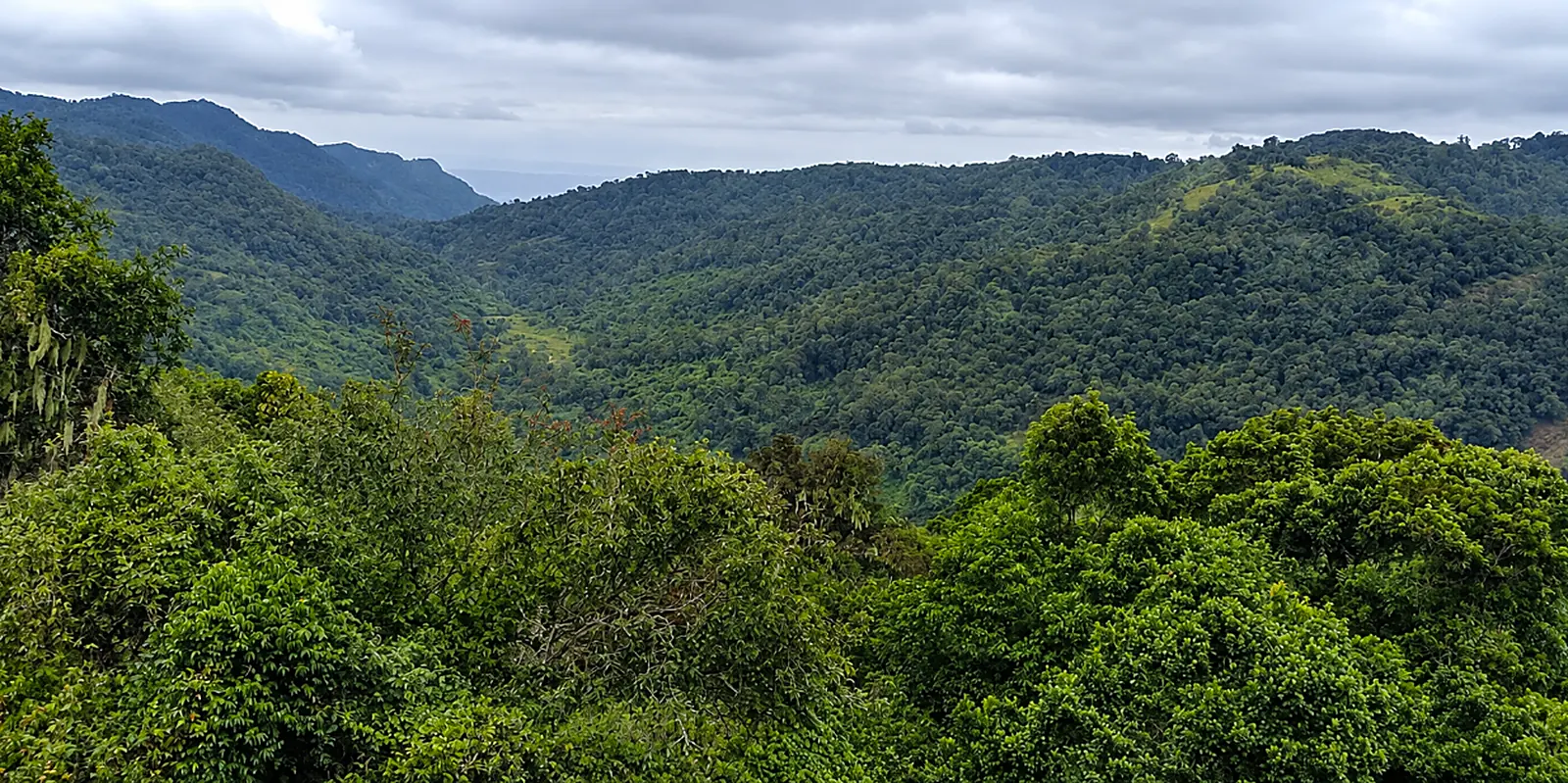
Entim e Naimina Enkiyio
The forest of the lost child
An indigenous forest outside Kenya's formal protected-area system, cared for by the Loita Maasai for generations.
A name with meaning
The Loita Maasai call the forest Entim e Naimina Enkiyio, the forest of the lost child. The name speaks to how vast and deep the forest is, and to the respect it demands. Its name is rooted in Maasai oral history and traditions, reflecting the forest’s mystery, heritage, and sacred connection to the community. For generations, it has been a source of life, water, wildlife, and cultural identity—a natural heritage that deserves protection for future generations.
Researchers describe the forest as sacred to the community. It is woven into ceremony, healing and daily life, and the community uses those ritual and sacred practices to decide how the forest is accessed, used and conserved.
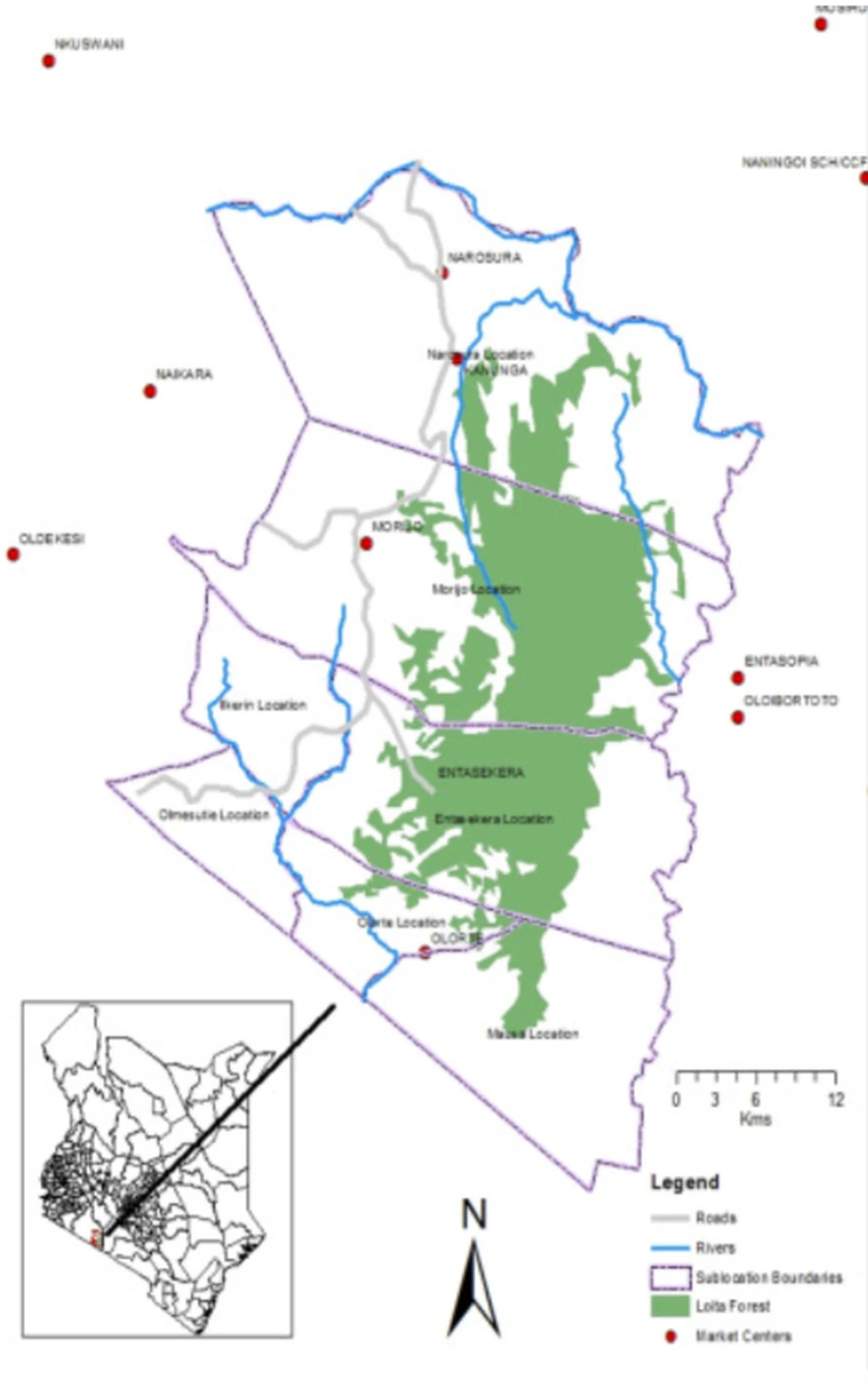 (opens the full-size map in a new tab)
The Loita Hills, Narok County
Loita Forest covers around 33,000 hectares of the Loita Hills in southern Kenya, within Narok County and close to the border with Tanzania.
The forest is a crucial link for elephants moving between ecosystems in the region. It is also home ground for around 20,000 Loita Maasai people.
Water, shade and life
Water is the forest’s greatest gift to the Loita Hills.
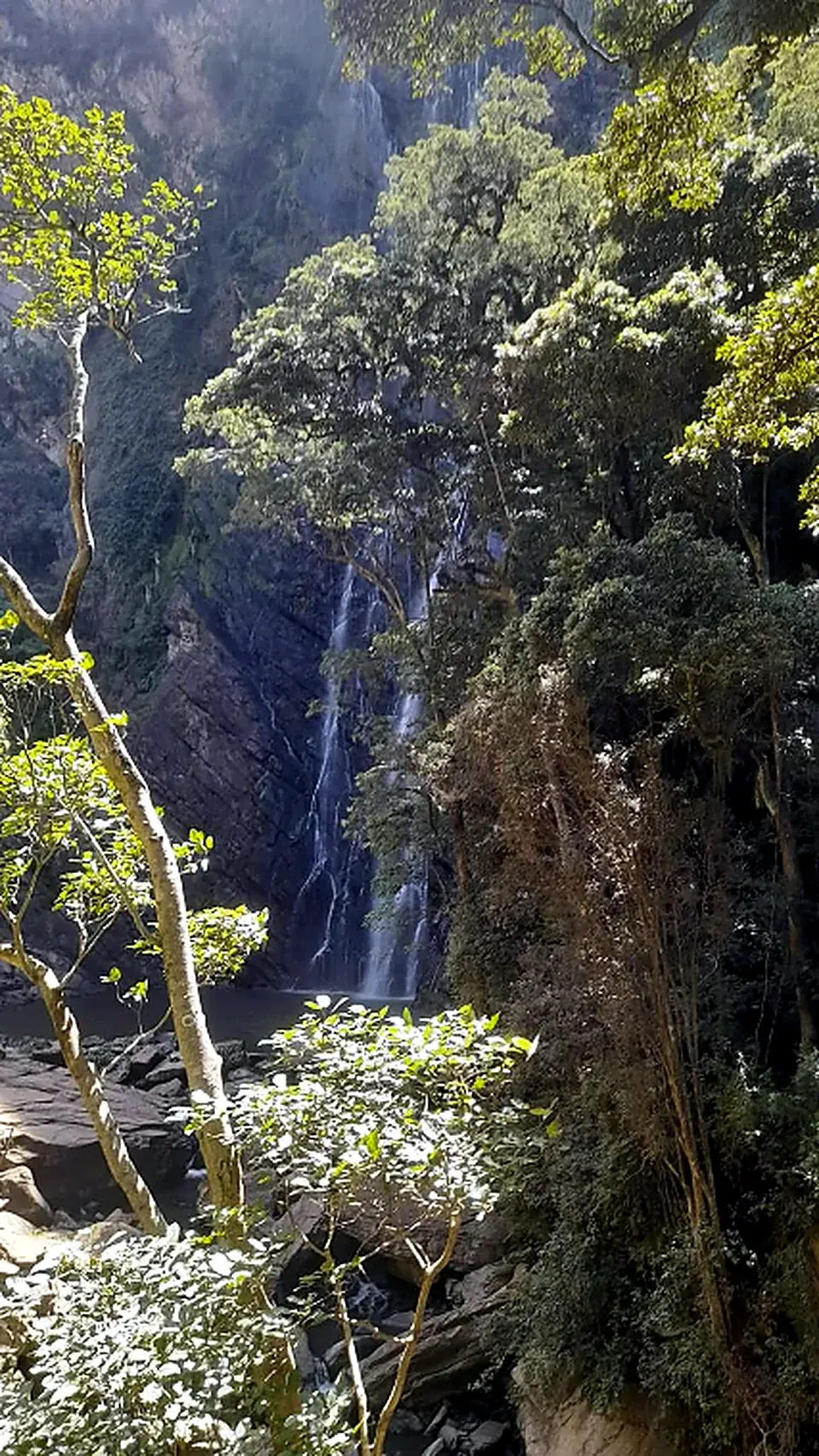
Rain and mist caught by the canopy soak into deep forest soils and seep out again as springs. Those springs feed streams that tumble over rock faces like this one and gather in clear pools below.
Because the forest releases its water slowly, these falls and streams keep running long after the rains have ended. Families, livestock and wildlife across the hills, elephants among them, rely on them through the dry months.
The cool, shaded banks shelter ferns, mosses and riverside trees, and give birds and other animals water and refuge. Where forest is cleared upstream, streams run fast and muddy in the rains and weak in the dry season. Keeping the forest whole keeps the water flowing.
What is happening to the forest
Research on Loita traces noticeable degradation to around the end of the 1990s. The pressures are connected, and most of them start outside the forest.
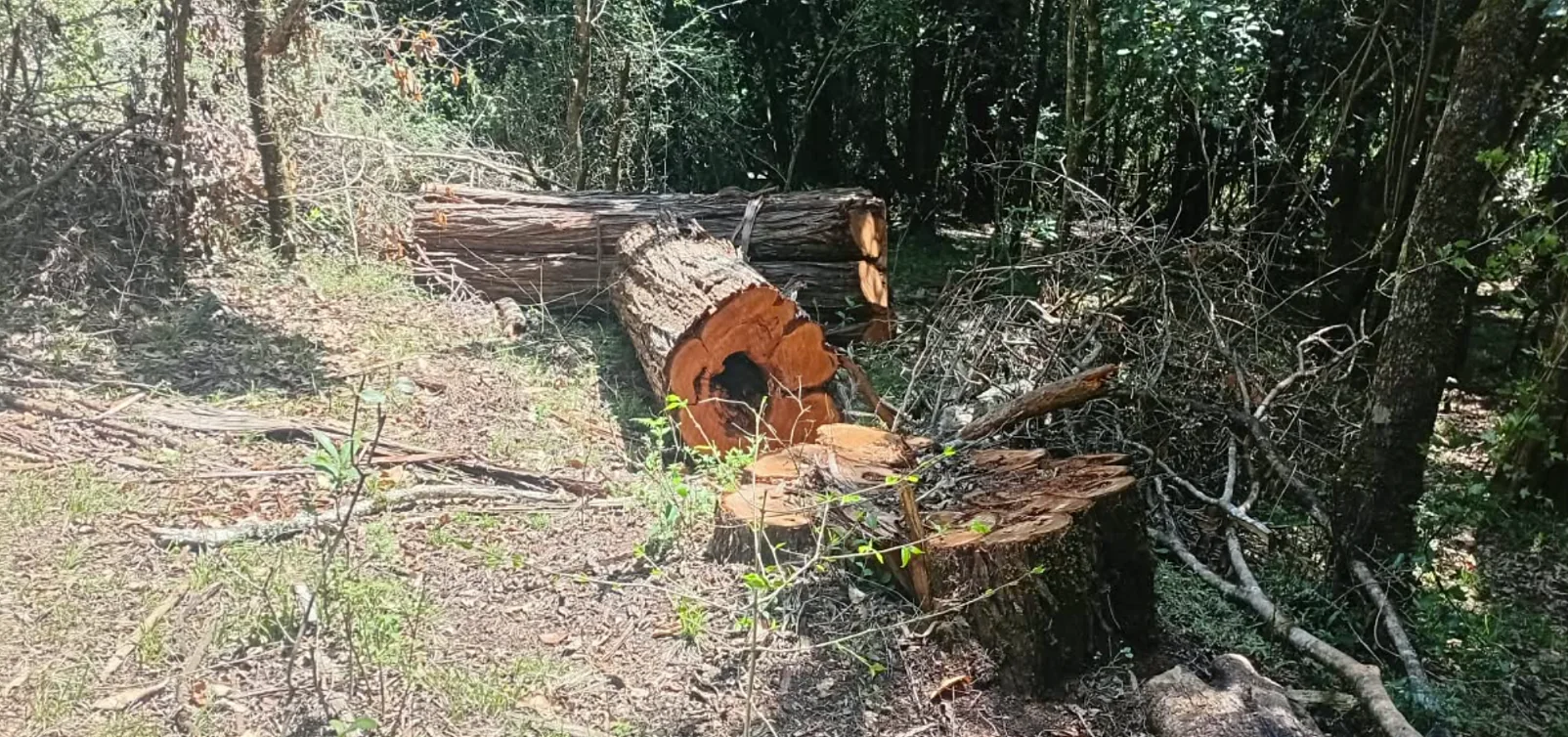
- Illegal logging and charcoal. Mature indigenous trees, especially cedar, are cut illegally for posts and timber, and charcoal production thins the forest further. Why it is illegal
- Expanding settlement and farms. Land is cleared for crops and buildings at the forest edge and within it.
- Unequal access. Some individuals have fenced off large tracts, taking shared resources out of shared use.
- Overgrazing. Heavy livestock use, especially in drought, can stop the forest regenerating.
- Weakening institutions. The traditional bodies that set forest rules face new strains, as do questions of land tenure.
Why logging in Loita is illegal
Illegal logging is a different threat from poaching. It does not target elephants directly; it removes the forest they depend on. Every tree cut means less shade, less browse and less water held in the hills.
This footage was filmed inside Loita Forest. It shows what illegal logging leaves behind: indigenous trees felled, split into posts and stacked in the forest, ready to be carried out.
What one felled tree takes with it
- Food and cover for elephants. Gaps in the canopy mean less browse, less shade and less of the quiet, undisturbed ground elephants seek out.
- Water. Forest cover keeps springs and streams flowing into the dry season. Where trees are cleared, the ground dries out and holds less water.
- Soil on the slopes. Roots hold the soil of Loita's steep hills. Without them, rain washes it away.
- A way of life. The same trees carry beehives, give medicine and shade sacred sites. Once cut, they are lost to the community for generations.
- More clearing. Logging tracks open the forest to charcoal burning, grazing and settlement, so one loss leads to the next.
What we do: we document illegal logging, report it to the Kenya Forest Service and the Kenya Wildlife Service, and support the community's own forest rules and the people who watch over the forest.
What legal logging looks like
- Most legal timber in Kenya comes from planted forests: plantations of trees such as pine, cypress and eucalyptus, grown as a crop.
- Harvesting is licensed by the Kenya Forest Service and limited to mature trees in designated plantation areas.
- Every area harvested must be replanted, so the forest is renewed.
- Timber is moved with official documents, so its origin can be checked. Farmers may also harvest trees they planted on their own land, under regulation.
Why logging in Loita is not legal
- Loita is a natural, indigenous forest, not a plantation. Its cedar and other old trees took centuries to grow and cannot simply be replanted.
- Kenya stopped logging in public and community forests in 2018. When the ban was eased in 2023, harvesting reopened only in commercial plantations, not in indigenous forests.
- Trees here are cut without a licence or a management plan, usually sawn on the spot and carried out of the forest as posts and planks.
- Loggers go to lengths to avoid being caught. In May 2025, Kenya Wildlife Service officers and Mara Elephant Project rangers stopped a lorry leaving the area with more than 2,000 cedar posts; its number plates had been hidden.
Land subdivision and the changing Loita landscape
Since the 2024 land subdivision, parts of the wider Loita Forest landscape have been divided into individual settlement parcels. Local estimates suggest that about 32% of the original forest area was carved out for subdivision. This figure has not yet been independently verified, and it is not the same as the share of forest habitat actually lost.
What is at stake
The affected land includes wildlife habitat, elephant movement corridors, swamps, rivers and water catchments. When it is cleared, fenced or converted, the effects reach far beyond each parcel: elephant routes are cut, wildlife populations become isolated, wetlands are damaged and the water that communities downstream depend on is put at risk.
We are already seeing more timber and fence-post harvesting, expanding settlement, and new maize and bean fields. The concern is not subdivision itself, but how the land is used afterwards and whether its ecological value is kept.
A path forward: a community conservancy
Landowners have legitimate rights and livelihood needs, and healthy habitats and corridors benefit everyone beyond any one boundary. A locally supported conservancy could bring the two together. Through voluntary partnerships, fair incentives and community-led planning, landowners could keep natural habitat, protect corridors and water sources, reduce unsustainable logging and find other ways to earn a living.
Any such model must respect land rights, reflect community priorities and involve the relevant government agencies and conservation partners. Until then, we work through education and direct engagement with landowners, so that decisions about land are informed ones.
Our vision is a Loita where people benefit from their land while elephants, forests and rivers continue to thrive.
Who decides the forest's future
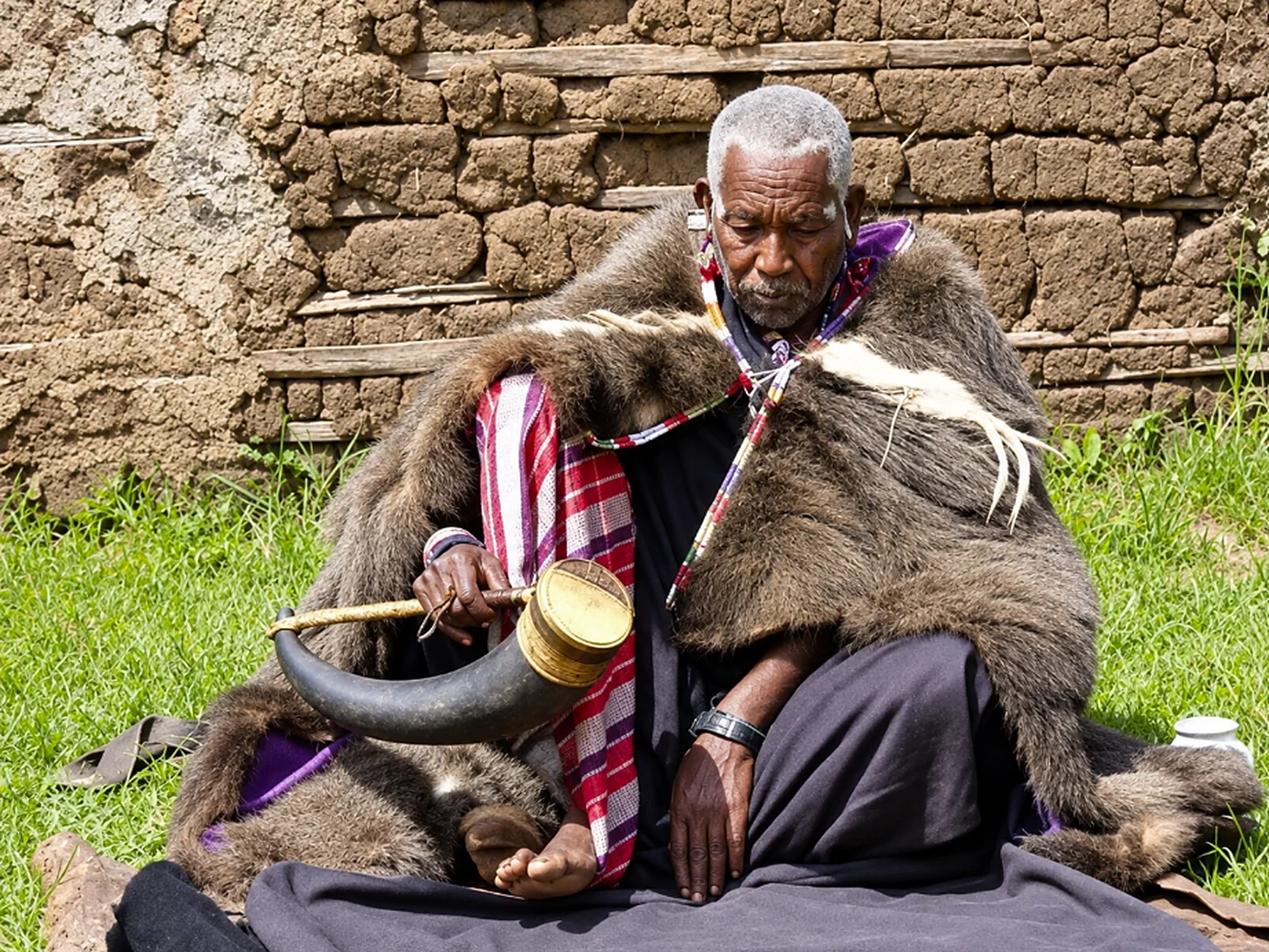
The Loita Maasai have managed the forest under customary law, with the traditional Oloibon institution at its centre. Today that institution is inviting government and other stakeholders into forest management.
Researchers caution that this shift could strengthen local stewardship, or could move power away from the community if newcomers reshape the rules. The community has responded to past state conservation proposals with its own initiatives, including the Ilkimpa Community Conservation Association.
Our view follows the evidence: conservation in Loita should strengthen the community's own institutions, not replace them.
Read more on community stewardshipRestoration and protection
We will report restoration and protection initiatives here as they are confirmed, each with its objectives, who is involved and dated progress.
See our conservation focus areas