
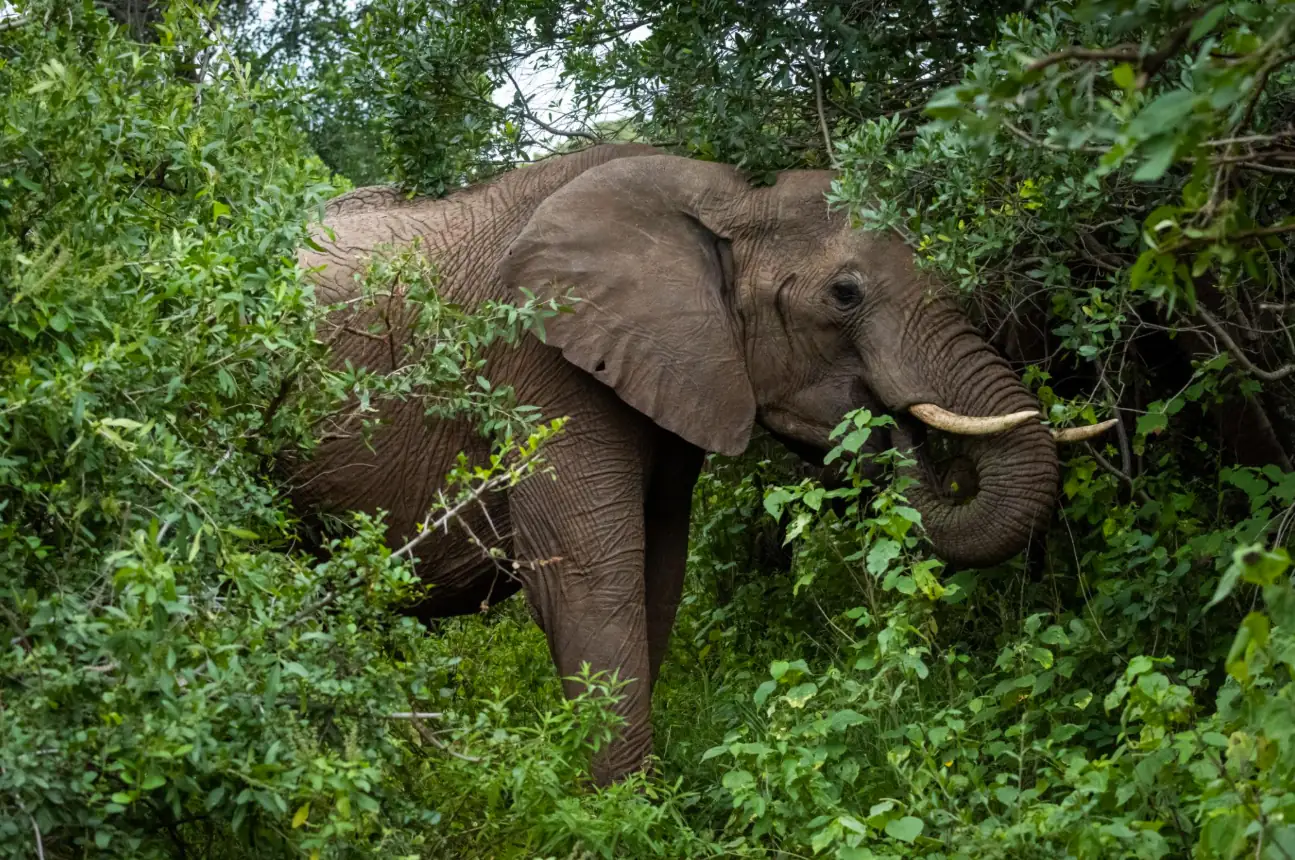
The elephants of Loita Forest
How Loita's elephants live, what threatens them, and what the evidence says about their numbers.
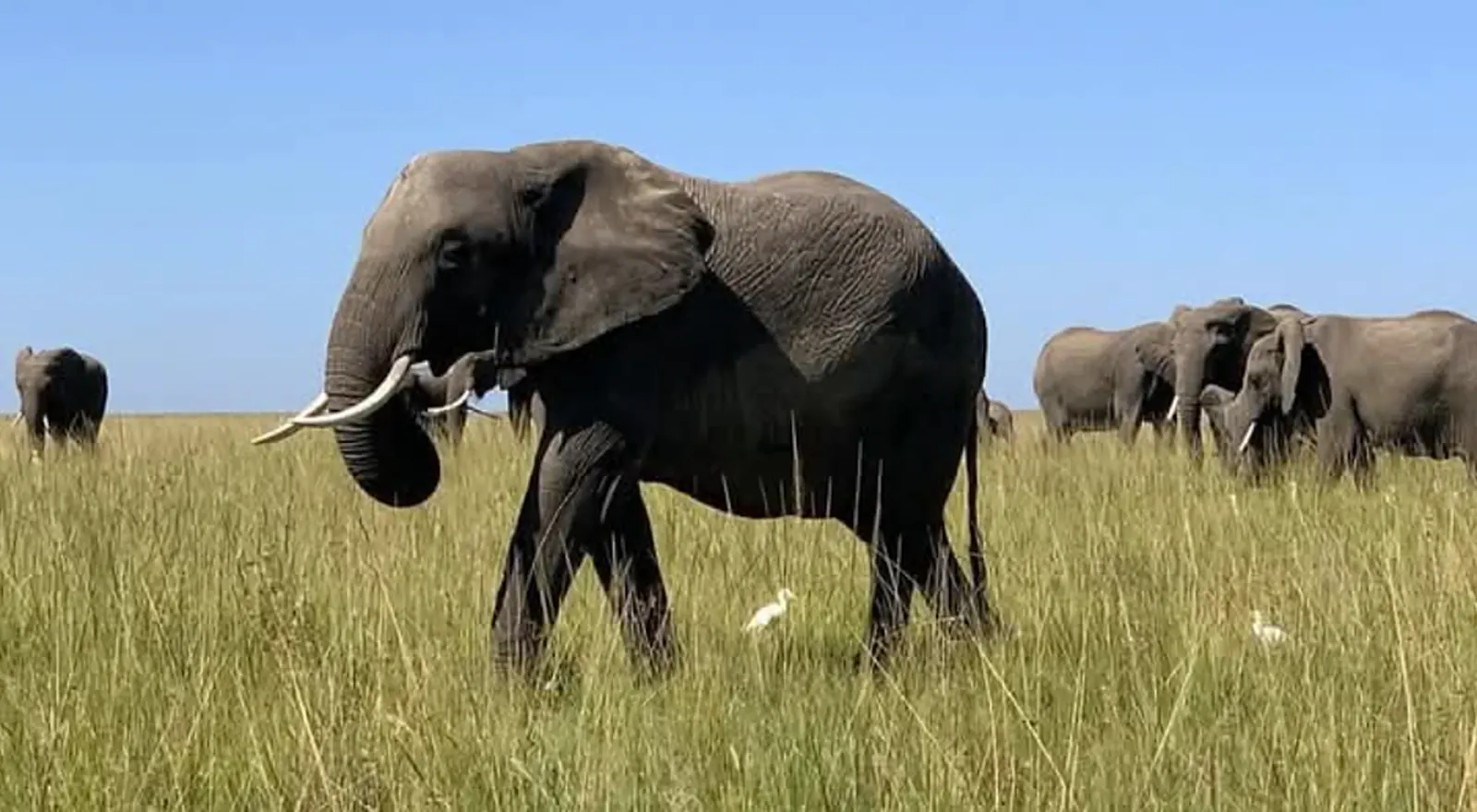
Social, intelligent and essential to the forest
The elephants of Loita are African savanna elephants (Loxodonta africana), a species the IUCN Red List classifies as Endangered.
Females and young live in close family groups led by a matriarch. Adult males leave at adolescence and move more widely, alone or in loose bachelor groups.
An adult spends most of the day feeding on leaves, bark, grasses and fruit. In doing so elephants open paths through thick vegetation, create clearings and carry seeds far from the parent tree. Few animals shape a forest as much.
Habitat and movement
Loita Forest gives elephants three things they cannot live without: food, water and cover. Its dense undergrowth, forest glades and fruiting trees provide browse all year round, its springs and streams keep flowing long after the surrounding plains have dried, and its thick vegetation offers shade and shelter from heat and disturbance.
The forest is also a crossroads. It lies on routes that connect elephants to the wider southern Kenya landscape, including the rangelands towards the Maasai Mara and the Nguruman escarpment. Elephants move between these areas with the seasons, retreating into the forest in the dry months and spreading out across open country when the rains bring fresh grass. Keeping these routes open is as important as protecting the forest itself.
Food and water
Forest springs and streams, and green browse that lasts into the dry season, draw elephants in when the surrounding plains dry out.
Safe passage
Elephants need to move between feeding areas, water and neighbouring ecosystems. Fences, farms and settlement across these routes push them into conflict.
Quiet ground
Survey work in Loita found that elephants avoided the most disturbed parts of the forest. Intact habitat is where they choose to be.
A forest that sustains a culture
The same springs and trees that feed Loita's elephants sustain the Maasai way of life, watering families and cattle through the driest months and providing food, medicine and the materials of ceremony.
Honey from the forest
Families hang traditional log beehives high in the trees and harvest wild honey for food and medicine. Honey is also brewed into the traditional drink shared at ceremonies and celebrations.
Herbal remedies and soap
Bark, roots, leaves and fruits are gathered to make herbal medicines and natural soap. Knowing which plants heal, and how to harvest them without harming the tree, is passed from elders to the young.
Water and ceremony
Forest springs, plants and honey all have a place in blessings and rites of passage. Many ceremonies are held in the forest itself, beneath sacred trees.
Every hive, spring and medicinal tree depends on a healthy forest. Protecting it keeps both the elephants and this way of life alive.
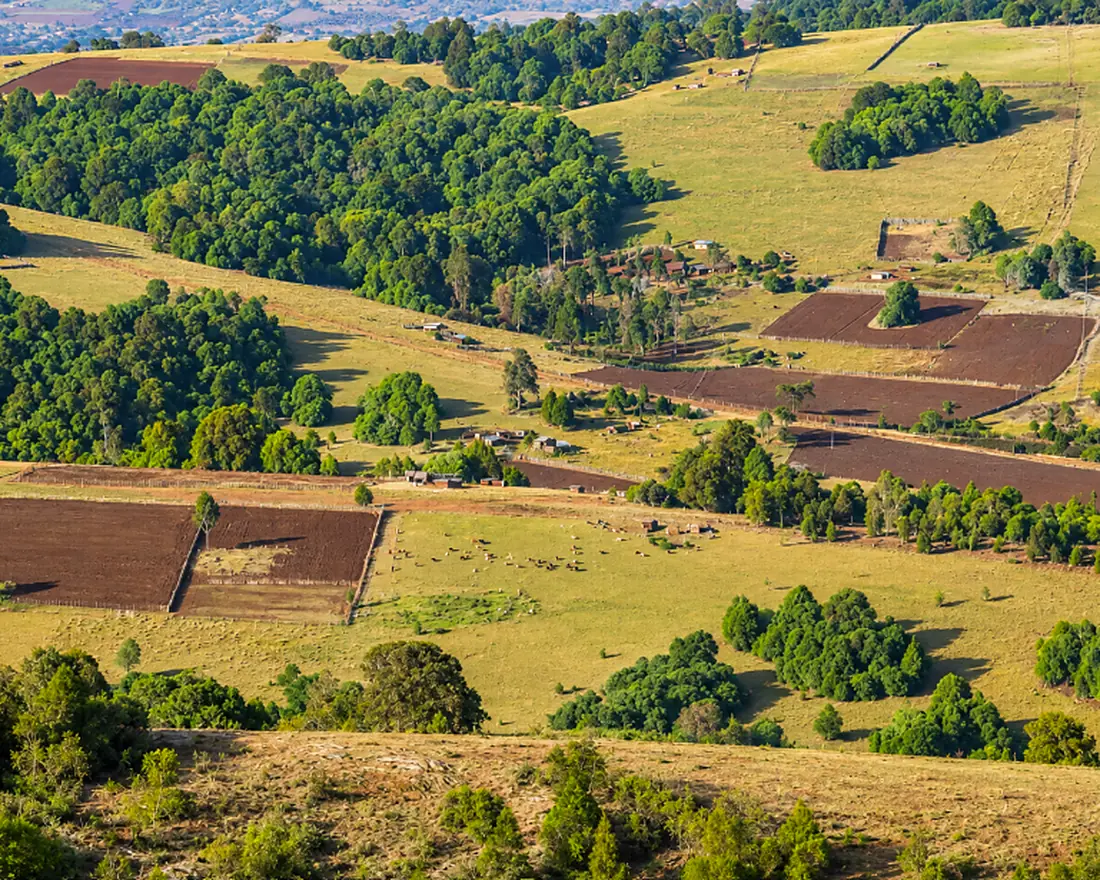
Less forest, more conflict
Habitat loss. Illegal logging of indigenous trees, charcoal burning and the spread of farms and settlement are shrinking and breaking up the forest. This is a stress on the habitat itself: every tree cut means less food, water and cover for elephants. Why logging in Loita is illegal
Blocked routes. Fencing and land subdivision cut across the paths elephants have used for generations.
Conflict with people. When elephants raid crops or damage water points, families lose food and income, and elephants can be injured or killed in retaliation.
Poaching. A separate, direct threat to the elephants themselves. With no permanent ranger force in the forest, they remain exposed to hunting for ivory and to snares set for bushmeat.
A changing climate. Drying rivers make the forest's water more valuable and the competition for it sharper.
Coexistence is a daily practice
Most of the work of living with elephants happens on farms and along paths, long before any conflict is reported.
- Keep a safe distance from elephants, especially mothers with calves, and never approach on foot.
- Report crop damage, injured elephants or suspected poaching to the Kenya Wildlife Service or local authorities as soon as possible.
- Prevention works best when it is planned with neighbours and adapted to local conditions, from farm layout to the timing of harvests.
Why we do not publish locations. To protect elephants from poachers, this website never shares the precise locations of elephants, their movements or the details of any protection work.
How many elephants live in Loita?
Counting elephants in a dense forest is difficult, because they are rarely seen from the air or the ground. Surveys here estimate numbers from dung: how many piles are found, how often elephants produce them and how quickly they decay.
Our current estimate is shown here. It is an estimate with a margin of uncertainty, not a live count, and numbers can change between seasons and years.
How to read an elephant survey440
Estimated number of elephants living in Loita Forest
Estimate from Loita Elephant Project. Elephant numbers in dense forest are estimated rather than counted directly, and can change between seasons and years.
Frequently asked questions
Are Loita's elephants forest elephants?
They are African savanna elephants that use forest habitat. The separate African forest elephant species lives in the rainforests of Central and West Africa.
Why is the forest important if elephants also use open country?
The forest offers food and water when the surrounding plains are dry, and cover from disturbance. Losing it would squeeze elephants into a smaller area shared with more people.
What is human–elephant conflict?
Any situation where elephants and people harm each other's interests, such as crop raiding, damage to water points or property, injury to people, and retaliation against elephants. It is one of the main threats to elephants across Africa.
Can I visit to see the elephants?
Yes. Through our partnership with Golden Oriole Adventures (opens in a new tab), you can visit Loita and walk the forest edge and surrounding hills with experienced guides from the local Maasai community. Golden Oriole specialises in walking safaris that combine wildlife, landscape and Maasai culture.
Loita's elephants live in thick forest and are shy of people, so a sighting is never guaranteed. Most visitors see the signs of elephants first: fresh tracks, dung, stripped branches and paths worn through the undergrowth. Your guides will read these signs with you and keep a safe, respectful distance from any elephants you do meet.
Visits follow the community's rules and respect sacred sites, and responsible tourism brings income to local families who live alongside elephants. To plan your trip, visit Golden Oriole's website.
Plan your visit with Golden Oriole Adventures (opens in a new tab)
How can I help?
Learn about the forest, share reliable information, and support conservation through the routes on our Get involved and Donate pages.